Address
Fengxi District, Chaozhou, Guangdong, China
Work Hours
Monday to Friday: 7AM - 7PM
Weekend: 10AM - 5PM
Address
Fengxi District, Chaozhou, Guangdong, China
Work Hours
Monday to Friday: 7AM - 7PM
Weekend: 10AM - 5PM
Choosing between wooden, ceramic, and plastic ocarinas can be confusing, especially for beginners. Discover the differences in sound, durability, maintenance, price, and playing experience to find the right ocarina material for your needs.
Ocarina materials can make a difference in how an instrument looks, feels, and fits into your daily playing routine. Wooden, ceramic, and plastic ocarinas each have their own advantages, from the traditional appearance of ceramic instruments to the portability of plastic models and the distinctive craftsmanship of wooden designs. Understanding these differences can help you choose an ocarina that suits your experience level, budget, and musical goals.
The ocarina is a wind instrument that produces sound when air is directed through its mouthpiece into an internal chamber. Players change notes by covering and uncovering the finger holes. Although the basic playing method is similar across different models, the material can influence the instrument’s weight, appearance, construction, and care requirements.
Wooden, ceramic, and plastic ocarinas are not interchangeable in every situation. Each material has different manufacturing requirements, and the quality of the finished instrument matters just as much as the material itself.
Wooden ocarinas are less common than ceramic and plastic models. They appeal to players who appreciate natural materials, traditional craftsmanship, and a distinctive wooden appearance.
Wood is sensitive to environmental conditions, including changes in humidity and temperature. A wooden instrument therefore needs suitable care to help prevent damage or changes in its condition. The exact requirements depend on the type of wood, the instrument’s construction, and the manufacturer’s recommendations.
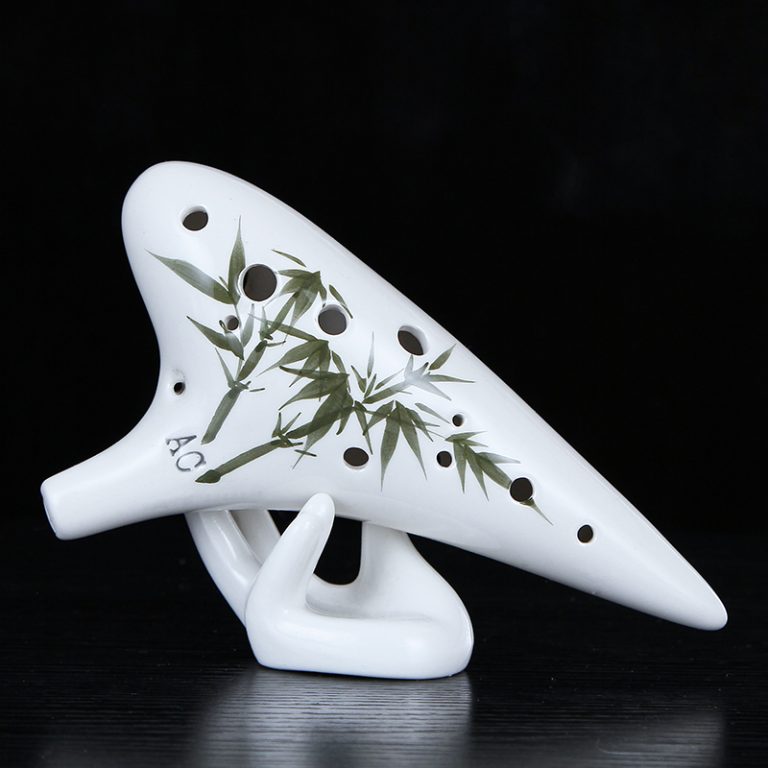
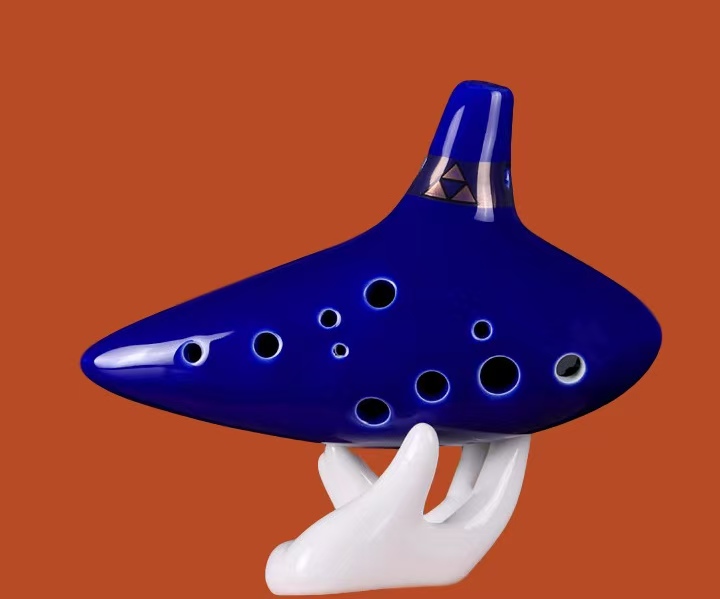
Ceramic ocarinas are widely recognized for their traditional appearance and the variety of shapes, finishes, and decorative designs available. They are commonly made from fired clay and can be produced in many sizes and musical ranges.
A well-made ceramic ocarina can be an excellent instrument for beginners and experienced players alike. However, ceramic is relatively brittle, so the instrument can crack or break if dropped onto a hard surface.
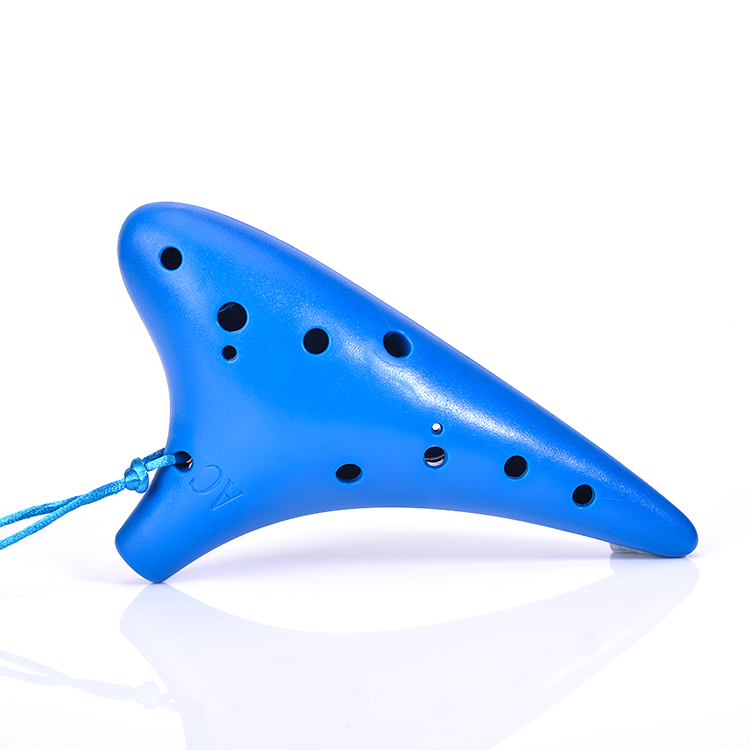
Plastic ocarinas are popular with beginners, students, travelers, and anyone who wants an instrument that is easy to carry. They are generally lightweight and more resistant to impact than ceramic models.
Plastic instruments are often available at accessible prices, making them useful for learning basic fingering and breath control. As with any material, sound quality and tuning depend on the design and manufacturing quality rather than price or material alone.
| Feature | Wooden Ocarina | Ceramic Ocarina | Plastic Ocarina |
|---|---|---|---|
| Appearance | Natural, warm, handcrafted look | Traditional, artistic, varied finishes | Simple, colorful, practical designs |
| Weight | Depends on wood and construction | Depends on size and thickness | Usually lightweight |
| Impact resistance | Depends on construction; may dent or crack | Can break if dropped | Generally more impact-resistant |
| Environmental sensitivity | Can be affected by humidity and temperature | Generally stable, but vulnerable to impact and thermal shock | Usually practical for everyday conditions; avoid excessive heat |
| Maintenance | May require special care for wood | Needs careful handling and appropriate cleaning | Usually easy to clean according to instructions |
| Price | Varies; craftsmanship can increase cost | Ranges from affordable to premium | Often budget-friendly |
| Best suited for | Players who value natural materials and craftsmanship | Players who want a traditional instrument and artistic design | Beginners, students, and frequent travelers |
This comparison describes common tendencies, not guaranteed results. Two ocarinas made from the same material can sound and perform differently because of their shape, internal chamber, hole placement, tuning, and overall manufacturing quality.
Sound is one of the first things many players consider when choosing an ocarina. It is tempting to assume that wood, ceramic, or plastic automatically produces a particular tone, but the reality is more complex.
An ocarina’s sound depends on its acoustic design, chamber shape, voicing, tuning, and how the player controls breath. Material can influence construction and may affect the instrument’s acoustic behavior, but it does not guarantee a specific sound quality.
Wooden ocarinas attract players who enjoy the natural appearance and tactile qualities of wood. Some players may prefer the overall feel of a particular wooden model, but it is not accurate to assume that every wooden ocarina has a warmer or softer tone than other materials.
If sound is your main priority, listen to recordings of the exact model you are considering. A clear demonstration across low and high notes can tell you more than a general description of its material.
Ceramic ocarinas are available in a wide range of designs, from simple beginner instruments to carefully tuned models made for more demanding playing. Their tone can be clear, mellow, bright, or expressive depending on the instrument’s design and the player’s technique.
For musicians who enjoy traditional-looking instruments, ceramic offers both visual appeal and practical musical options. A well-tuned ceramic ocarina can be suitable for practice, solo performances, and playing melodies inspired by games, films, and folk music.
A good plastic ocarina can produce a clear and enjoyable sound. Plastic does not automatically mean poor sound quality, just as ceramic does not automatically mean superior sound quality.
For a beginner, an accurately tuned plastic ocarina may be a better choice than a poorly made instrument of a more expensive material. Focus on tuning stability, comfortable fingering, and consistent notes rather than material alone.
Durability matters if you plan to carry your ocarina to school, music lessons, outdoor activities, or travel destinations.
Plastic ocarinas are generally the most practical option when impact resistance is important. They are often better able to withstand everyday bumps than ceramic instruments, although they can still crack, deform, or become damaged under certain conditions.
Ceramic ocarinas need more careful handling. A fall onto tile, concrete, or another hard surface can cause serious damage. A padded case is a worthwhile accessory, especially if you plan to carry your instrument regularly.
Wooden ocarinas have different risks. Depending on the construction and finish, they may be vulnerable to dents, cracks, or environmental changes. Follow the care instructions provided by the maker.
For travel, plastic is often the most convenient option because it is lightweight and relatively resilient. It is a practical choice for beginners who want to practice outside the home without worrying as much about accidental knocks.
A ceramic ocarina can also be taken on trips if it is stored in a suitable protective case. Wooden instruments can travel well too, provided that they are protected from impact and unsuitable environmental conditions.
Every ocarina needs reasonable care, but different materials may require different precautions.
Regardless of the material, do not force cleaning tools into the windway or internal chamber. Incorrect cleaning can affect the instrument’s performance.
Price varies according to craftsmanship, tuning quality, design, brand, and included accessories. Material is only one part of the overall cost.
Plastic ocarinas are often an economical way to start learning. They can offer good value for students and casual players who want to understand fingering and breath control before investing in a more expensive instrument.
Ceramic ocarinas are available at many price points. Affordable models can suit beginners, while more carefully crafted instruments may offer detailed finishes, specific tunings, or refined construction.
Wooden ocarinas may cost more when they require specialized craftsmanship or careful material selection, but prices vary significantly. A higher price does not guarantee better tuning or a more suitable playing experience.
When comparing products, check the instrument’s tuning, musical range, fingering chart, sound demonstrations, return policy, and customer support. These details are often more useful than comparing material or price alone.
The best choice depends on your priorities, budget, and how you plan to use the instrument.
If you are unsure, start by comparing the sound and tuning of specific models. A well-made, affordable instrument that feels comfortable to play is usually a sensible first purchase.
Before choosing a wooden, ceramic, or plastic ocarina, consider these important points:
For beginners, a well-tuned 12-hole alto C ocarina is a common starting point, regardless of whether the model is ceramic or plastic. Always check the product’s actual tuning and range rather than assuming all instruments are identical.
Not necessarily. Ceramic ocarinas often appeal to players who value traditional design and craftsmanship, while plastic ocarinas are usually lighter and more resistant to impact. Tuning, construction, and comfort are important factors when comparing individual instruments.
There is no universal answer. Sound depends on the instrument’s design, tuning, construction, and the player’s technique. Listen to recordings of the specific models you are considering rather than choosing based on material alone.
A well-made plastic ocarina is often a practical choice for children because it is lightweight and generally more resistant to accidental drops. Adult supervision and an age-appropriate design are still important.
Yes. A well-tuned plastic ocarina can be suitable for regular practice and musical development. The player’s progress depends on technique and consistent practice, not simply on whether the instrument is made from plastic or ceramic.
Ceramic ocarinas generally need careful handling and appropriate cleaning. Follow the manufacturer’s instructions, avoid harsh chemicals, and do not force objects into the internal air passage.
Its lifespan depends on build quality, frequency of use, storage, and handling. A carefully maintained instrument can last for years, but ceramic models are vulnerable to impact damage and wooden models may require additional environmental care.
Wooden, ceramic, and plastic ocarinas each offer different advantages. Wooden models appeal to players who appreciate natural materials and craftsmanship. Ceramic ocarinas combine traditional design with a broad range of musical options, while plastic models are often practical, lightweight, and budget-friendly.
There is no single material that is best for every player. Consider your budget, playing goals, preferred design, and willingness to care for the instrument. Most importantly, choose a well-made ocarina with reliable tuning and comfortable fingering.
Ready to find your first ocarina? Explore our ocarina guides to learn more about instrument types, fingering, tuning, and beginner-friendly playing techniques.